

Welcome! If you’re yet to subscribe, kindly do so with this button. Also, remember to leave a like and a comment.
Dear Bolu,
As the curtains close on the year, the lights come on: red and green alternate on white strings that circle plastic pines, hang pegged to walls that have known only paint and cobwebs all year round, and clamp onto boring doorposts and naked light poles. Twinkling lights and colour tell you what time it is, as if you need reminding. The songs start filling the airwaves: one fellow relishes another opportunity to butcher Feliz Navidad, the other prepares an inferior remix of Partridge in a Pear Tree. Santa Claus again walks the streets, gifting and scaring people in equal measure. Children register their first memories of the season in beautiful dresses; families match pyjamas; lovers make full or empty promises of forever; and in a gotcha tweet we learn that the wise men were not three.
Enthusiasts of this season also start broadcasting their wishes to anyone who might give them an audience.
“Merry Christmas in advance,” they say. They couldn’t care less whether you say it back. They’re delighted enough to have expressed their wishes.
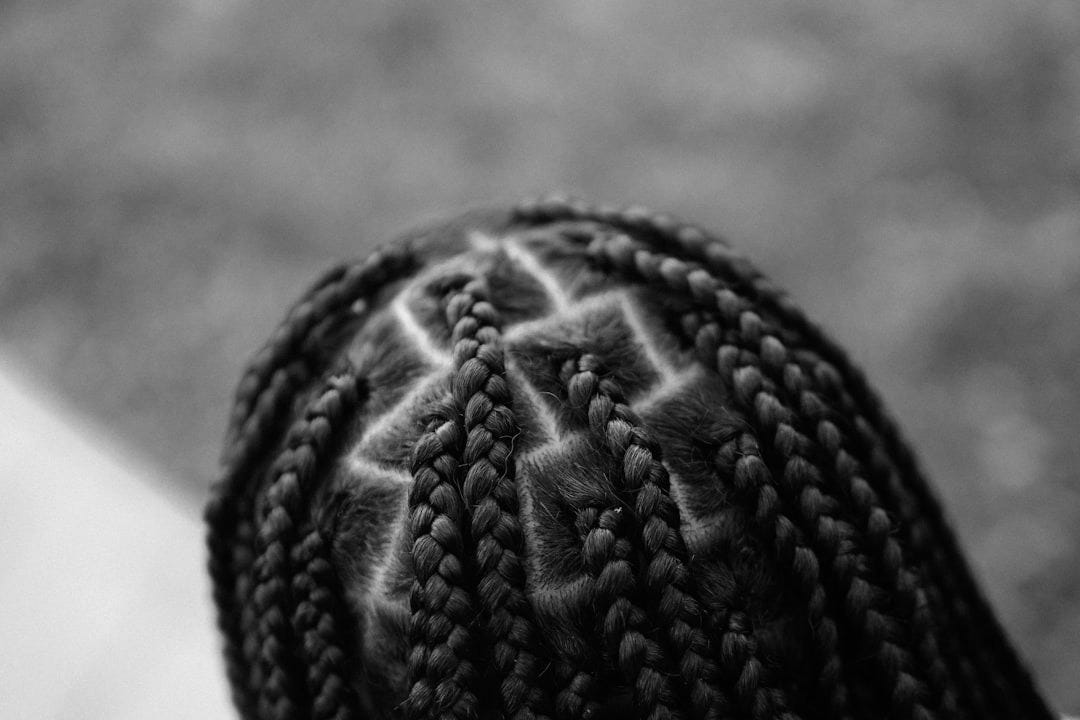
Although all of these characterise the season, there is one ingredient that, according to the featured piece in the last edition of The Journal of Trite Matters, seems to be growing scarce in the Christmas recipe: The Christmas Hair. In the piece, Babatunde Bamidele Bartholomew, a Doctor of Hair Anthropology (DHa) from The Thing University, and therefore an expert on human hair, had the following to say.
Recipes aren’t lost in a single moment. They disappear slowly after years of neglect layered with forgetfulness, disuse, and misuse. One morning we will wake up to find that no one makes Christmas hair anymore. It won’t be long now. We’re already comfortable wearing wigs and even shaving it all off. Nothing here is sacred—not cows, not hair. Well, maybe the cows.
Journal of Trite Matters (pg: 2; iss: 17; pub: 11-25)
The piece sparked a flurry conversation on the internet, with many pointing out that the decline in Christmas hairdos was driven by the exorbitant cost of styling and maintenance. For others, it was a matter of time: the eight hours usually sacrificed to the salon chair every few weeks could be channeled into other endeavours.
There were also those who insisted that neither time nor money was the issue—people simply didn’t care enough anymore. There was, for them, a clear propaganda making waves, encouraging people to cut their hair and resort to wigs. Loudest among these voices was that of Babatunde (DHa), who, joined by scores of people in town, marched in protest yesterday.
Covering the demonstration for Miìgbọ́, the local paper, I made my way to the protest grounds.
“I say jama jama jama jama for one time,” Babatunde said through a red and white megaphone.
“Jama!” the crowd roared.
It was a call and response that excited the protesters, and for a good while, this was all that happened. They chanted until Babatunde, still holding the megaphone, started addressing the growing crowd and anyone who cared to listen.
“They say we are asking for too much,” he began. He paused to take in the crowd of people, turning full circle as he did so. “But we are only asking for what is right”.
This was met by “Yaaays,” from the crowd.
“We are only asking that they do the needful, that they do as they ought,” he continued.
“Yes sir!” the crowd trumpeted.
“We will not be swayed by the short hair propaganda,” he bellowed.
If the purpose of the protest wasn’t clear from the branded shirts and placards, which read texts like “HairDo not Hair Don’t“ and “To Hair is Human”, it was clear now.
“No more short hair,” the crowd continued to chant.
With the chanting behind us, I got a moment to interview Babatunde, who insisted I call him Cubic B. I obliged, but I cannot tell you whether the name is predicated on the peculiarity of his initials or the shape of his head, which, from a certain angle, is indistinguishable from a cube. For Cubic B, author of The Three Bs: Buns, Braids, and Beauty and Wigs: The West and Its Hair Playbook, it was a simple matter: there was no justification for this trend of low and skin haircuts. While he conceded that the treatment and management of hair today came at some cost, he insisted that generations past had encountered similar difficulties and they had not resorted to haircuts.
“In fact,” he started, rubbing the top of his flat, bald head, “the world has never been better equipped to deal with the treatment and maintenance of different kinds of hair than it is today.”
“Now you can tell hair by texture—there are letters, numbers, and symbols. We have products and therapies that make hair management easier. There are guides and manuals, and yet there’s still a movement to get more haircuts out of women. It is utterly ridiculous,” he said, shaking his head like a disappointed parent looking through the term results of their child.
He was telling me about his soon-to-be-announced podcast titled Hair Hair, when he got pulled back into the thick of the protest.
Speaking to another protester, Dennison, who, I figured from the lines on his forehead, was in his late thirties to early forties, I asked him why he joined the protest.
“I had to,” he said. “I recently purchased a convertible vehicle in fulfilment of one of my childhood fantasies. Do you know Bonnie & Clyde?” he asked.
I did. I thought of the bank robbers; he, I’d soon realise, meant the Carters.
“In the music video, Jay-Z is driving and Beyoncé is in the passenger seat. Her hair is in the wind, and they’re having fun. I’ve always wanted to experience it. So when I got this convertible and my wife decided to cut her hair, I was devastated. My whole world crumbled to the ground,” Dennison lamented.
There were also women at the protest ground. Ms. Ada, who owned a hair salon close by, was gracious enough to speak to me.
“I’ve never joined a protest before but I had to join this one,” she began, her skin glowing in the afternoon sun.
“Business has slowed down, almost to a halt. My salon on the upper floor is just beside a barber shop. And this week alone, I’ve seen three of my regular customers go there to get a haircut. We can’t continue to survive like this,” she finished.
Ms. Ada’s comments were indicative of the state of the nation’s economy. Inflation had crippled a lot of businesses, and it was not a surprise that the hair industry was affected. In fact, some weeks ago, the internet went up in flames over the price of All-back, with many arguing that such a simple style should not cost the same as a selfcon.
Later, I spoke to another young man, Titus, with the most curious reason for protesting.
“I don’t really have much to say,” he began.
Certainly in my experience, that’s usually how a lot of yapping starts, and Titus did not disappoint.
“I’m what you might call a sentimental man. Do you know what that is?” he asked.
I wore a confused look for a brief moment, before nodding.
“I’m a sentimental man, and hair is one of those things I’m sentimental about,” he said.
He didn’t stop here.
“Do you know that on the first date with my wife, we spent the night loosening her hair and watching a movie?” he asked.
Of course, I did not know that.
“Hmmm,” I replied, continuing to nod as he rambled on.
“We did this from time to time, until two weeks ago, when she said she was tired of the hair,” he said, breaking into a wry smile.
“I’m a sentimental man, and it hurts that I can no longer do something I loved,” he lamented.
I didn’t have the heart to tell him that hair grows back, or that she might eventually change her mind. To him, the loss was absolute. I left him to his mourning and watched as the protest dragged on, until the crowd finally dispersed, and I along with it.
Reflecting on the whole affair now, I’m not sure where I stand. Years ago, I heard someone say, with boyish naivety, that braids were the hairstyle of angels. I believed them; the photo in my locket is a testament to that. Even so, I have lived little enough to see angels with no hair. So Christmas hair or not, there will be angels this season. There will be you, dear friend.
Fin.
Thanks for reading! I’m delighted you made it here. If you liked this issue of Dear Bolu, you could sign up here so that new letters get sent directly to your inbox.
If you really liked it, do tell a friend about it.
Also, remember to leave a like or a comment!
Write you soon. Merci!
- Wolemercy