

Dear Bolu,
I’d hoped to write you a fun letter about songs and singing, but I conceived this along the way. It’s a simple letter. It won’t answer your questions about meaning, faith, or the afterlife. It won’t tell you how to fix your life, nor will it allay your fears about AI. It’s a simple letter about one or two little joys of mine.
The first joy is one I no longer enjoy, thanks to the tax man. He’s not only asking for more of my earnings but also that I use descriptive transaction remarks when I make transfers. And the latter is a killjoy because I like to have fun with my remarks. I like to simply say, “Cheers” or “Enjoy” when I send money. If I’m feeling very serious, I say “As discussed” instead, or “Per our conversation.” I can also be a bit silly by saying “For popcorn” or “For peanuts” when I know that the purpose of the transfer is anything but that.
I became aware as I wrote this that there is “joy” in “enjoy”. It’s a word with life, with a bounce and dance. It’s not to be used carelessly, casually, or with indifference. Don’t tell people to “Enjoy” when you don’t mean it.
You are right to think that these are not practical remarks, but I like them. They add a bit of fun to an otherwise serious procedure—a transaction (a word you cannot say without letting out a little frown). The tax man’s requirement to be explicit about intent is, therefore, costly. He wants me to say, “20W bulbs for the house” when I buy 20W bulbs for the house, or “For books” when I pay for books. But I will rebel. I will find joy in a different way. I will write instead, “Bulbs: that I may see home again” or “Books: that my mind may be enriched.” I will win.
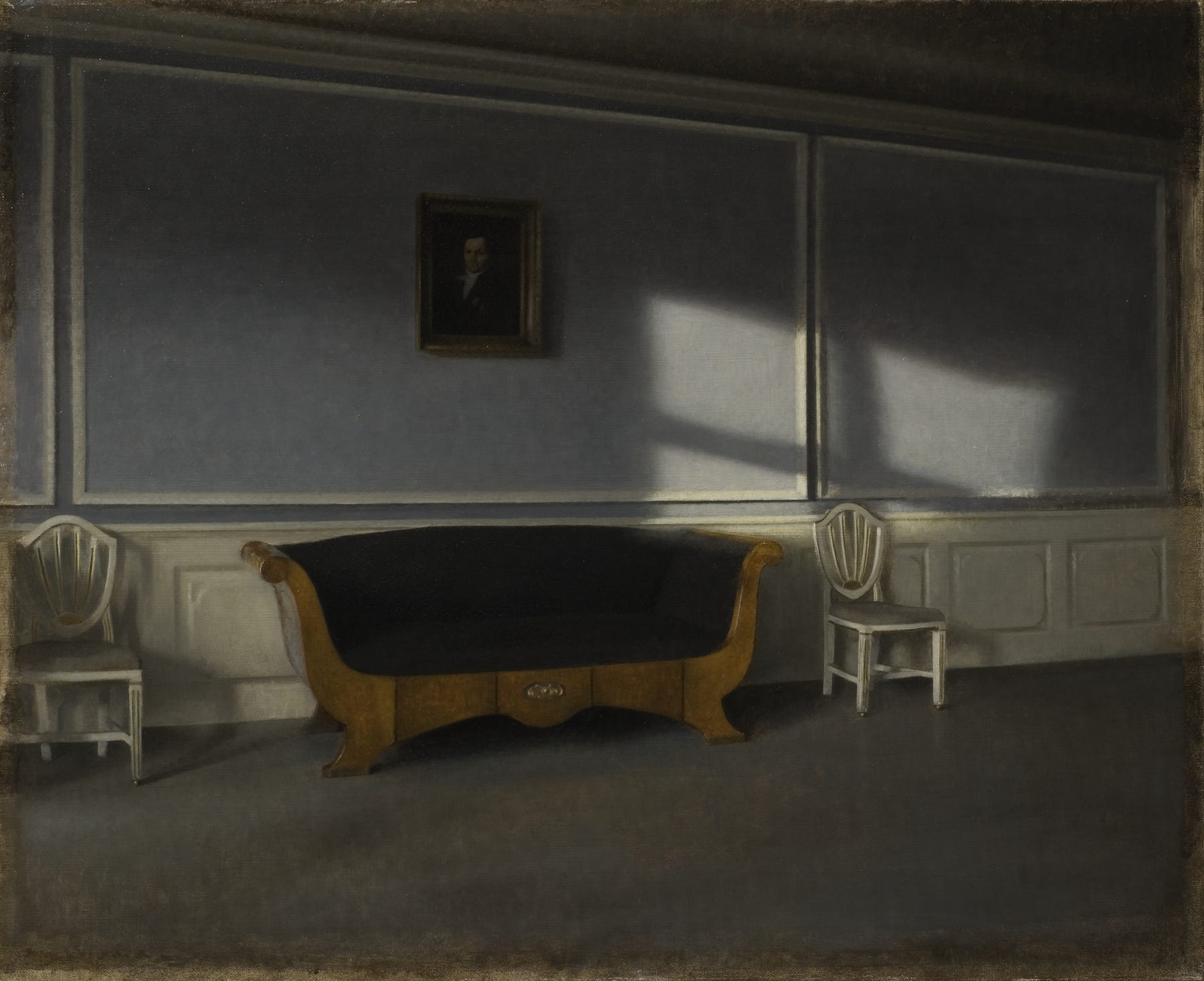
Another joy is my living room. It’s never quiet, but it’s always still. And I like its stillness. Whether I’m sitting, lying on the sofa, or pacing around in contemplation, it’s a refuge for both my body and mind. It’s the airiest part of the house, and therefore the best place for fresh air. It has a few comforting sounds, the loudest being the ticking of the analogue clock on one of its walls. It’s a round clock with a brown frame, and it’s been in the family for many years.
Although it ticks continuously, it’s set to the wrong time, and I haven’t had time to set it correctly. I’m tempted to call it a broken clock, but it’s not really broken, is it? It’s just not set right. And there is a difference: a broken clock announces it’s broken, but a wrongly set clock fools you into thinking it’s in good health. I, for one, know the ways I’m broken—they’re not hard to decipher. But I wonder about the ways I’m wrongly set. The ways I tick and tick and tick in error. But I digress. I like the ticking of my brown clock. I like its inevitability.
Ticking is not the only sound that fills the stillness here.
Unlike the clock that hangs, the freezer sits comfortably on a wooden matrix that has long forgotten the forest of its brothers. It’s old, this white box, and rust gathers at its base. Yet it hums without pause or failure. I imagine it sings of the rich history of the soups, beef, chicken, and many bowls it has saved and preserved. It must hum of the first time we found a place for it in the living room. It would have tumbled under its own weight but for the hands of a stranger I no longer remember. But I’m sure it remembers.
In the same way, it must remember the days the power grid collapsed. It tried to preserve all that was in its keep, but the state of the grid was a collapse—not an interruption, not a break, not even a failure. There is only so much you can do against a collapse. Its insides thawed, and we had to empty it of all the food. It must hum of this—how we cleaned it out and let it breathe until power was restored.
I remember we also sat on the freezer, much to the displeasure of the older people around. There’s something cool about sitting on surfaces that leave your legs hanging—a fence, a car boot, the deep freezer—an act that seemed to those older people a telltale sign of waywardness and indiscipline. I am older people now, and I surmise that the freezer never enjoyed being a seat. It wasn’t built for that, after all. Or maybe it enjoyed it sometimes, the same way being pestered by a loved one can sometimes be endearing. It was always warm at the back, the freezer. Maybe we made its top warm when we sat on it. And don’t we all want warmth all over?
It occurs to me as I sit with this thought that I’m not only watching these objects age. I’ll be the freezer soon. Old, with weak legs. I hope then that I still radiate warmth, no matter the cold on my insides; that I keep us safe and preserved in memory, bone and sinew; that if I fail and forget in the event of a collapse, you let me catch my breath and trust me again. I hope that you’ll be there when I have little else to give but a dull, continuous hum; that you’ll be there on the sofa, listening, even with all the music in the world outside; and that if your legs allow, you still hang around and keep warm the parts of me I wasn’t made to reach. For now, I’ll keep ticking. And should I tick in error from time to time, I hope you have the patience to set me right, dear friend.
Fin.
P.S.
I’ve never given much thought to my idea of a dream home. But in fleeting moments, I recognise certain things I’d like: a ticking clock with a face, and the sound of birds and the wind drifting inside.
Thanks for reading! I’m delighted you made it here. If you liked this issue of Dear Bolu, you could sign up here so that new letters get sent directly to your inbox.
If you really liked it, do tell a friend about it.
Also, remember to leave a like or a comment!
Write you soon, merci!
- Wolemercy
Apologies to the very dead horse I'm about to beat. But you really write so well.
This is beautifully written 🥹